
Romance Is Easy. Love Is Hard.
Romance, in its essence, can be a very dangerous trap. Those warm fuzzies, those butterflies, that little toe kick when the kiss finally happens…all of it can be fabricated as easily as a spell. It’s one of the reasons why we’ve long poetically ascribed it as “magic” and “witchcraft” in songs and humor—because we’re all aware, either consciously or subconsciously, that romance is a temporary shower of pixie dust and glamour meant to lead us into lasting love.
It just doesn’t always work out that way.
“Does this end in a HEA?”
I always blink for a few moments when I read that question on the screen. Bookstore intake form, PR promo pitch, general readership question…everyone wants to know if my novels—classified as “modern epic fantasy romance”, or “romantasy” when the character counts are super limited—will end in that much-needed, greatly-desired Happily Ever After.
As a whole? For the series?
Of course!
But here’s where I’ve felt challenged to go against the status quo when it comes to writing fantasy romance, romantasy, even the new urban fantasy romance subgenre that is the new upcoming series, The White City {insert shameless promo moment here}:
Happily Ever After isn’t romantic.
It’s love.
And love is so much harder than figuring out a relationship status.
Mysterious little notes and flourishes of beauty were things he used to give her, just to remind her that even when he was off saving the world, she was still his world.
-Ithandryll
So… What exactly is the difference between Love and Romance?
Because I know that if you’re reading this, you’re probably someone who reads a lot, I’ll start with the strict definition(s) according to various dictionaries (i.e. Merriam-Webster & Oxford):
ro•mance {rō-ˌman(t)s}
(noun)
1.a feeling of being in love
2. a feeling of excitement and mystery associated with love
3. a quality or feeling of mystery, excitement, and remoteness from everyday lifelove {ləv}
(noun)
1. unselfish loyal and benevolent concern for the good of another
2. an intense feeling of deep affection
3. the act of putting others before oneself
Right away, I can confidently confirm that I don’t simply write about romance in my stories.
Sure, the warm fuzzies are a great feeling. I love the toe-kicking, butterfly-stirring moments between the couples in Song of the Sidhe and The White City (and also Garden of the Gods, but that series is on the back burner for now). I love the stolen kisses and furtive whispers and soft touches that make someone wonder if that’s all it’s going to be or if it’s about to become “more”.
Knowing that it’s probably definitely going to become “more”, of course 😏
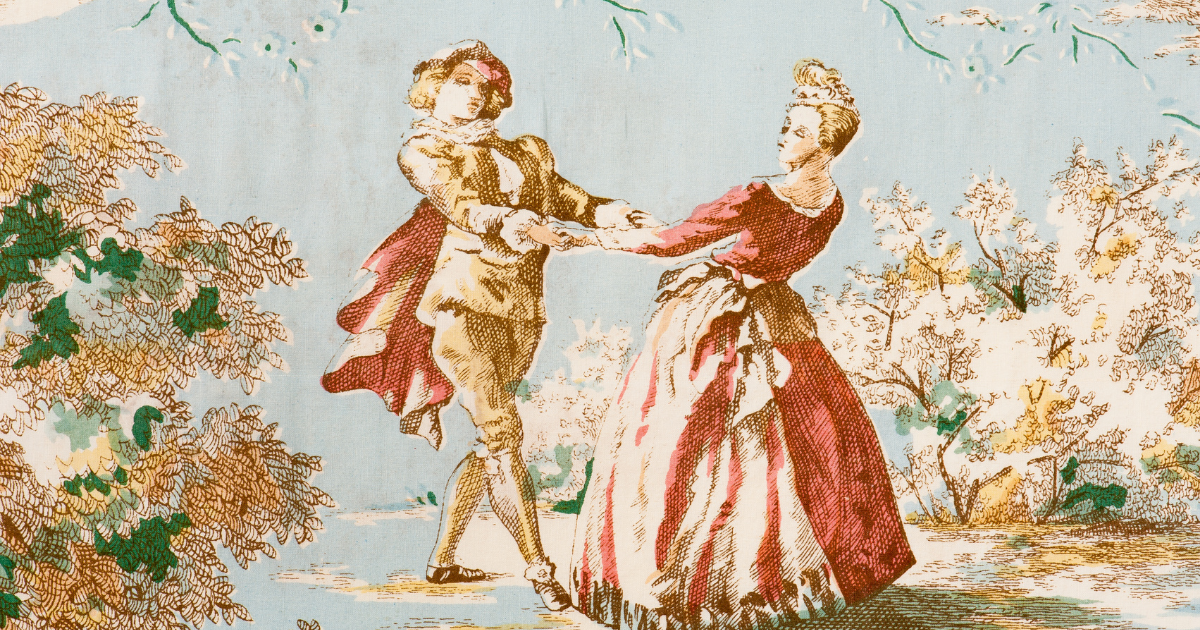
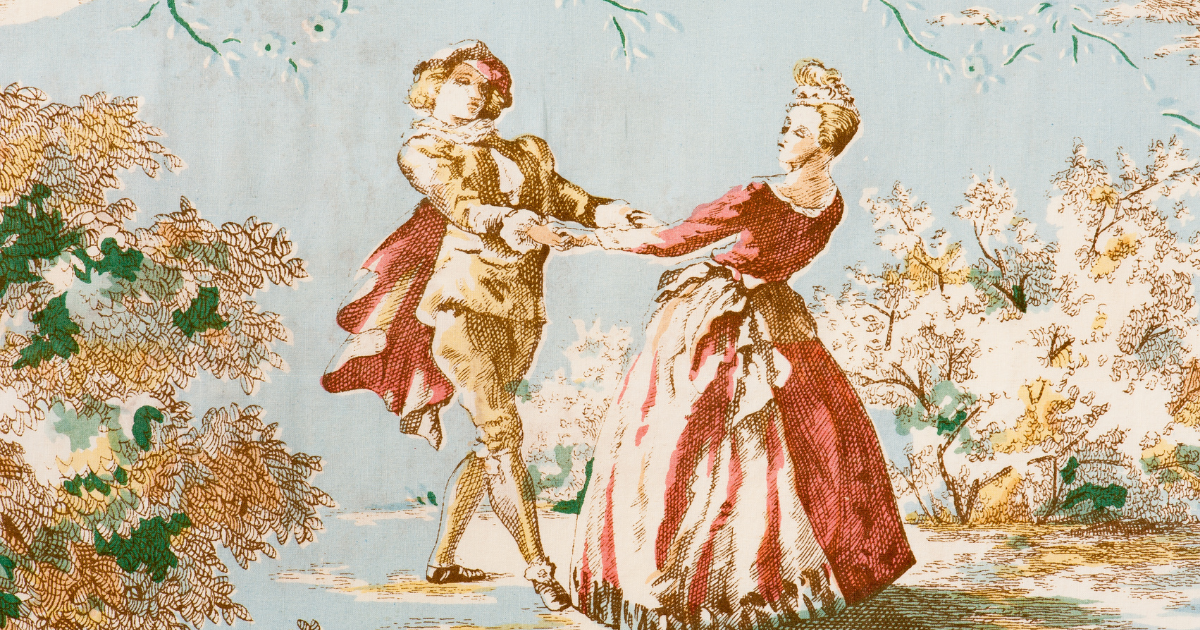
Antique toile fabric depicting a romantic French couple in the 19th century. (Canva)
But what happens after?
What happens when challenges arise? When the first several dates have gone great, the excitement and mystery is bathing our protagonists in all the tingles and thrills…but then a shoe drops and/or s**t hits the fan?
More importantly: what happens when one, or both, royally mess up?
I’m going to confess something to you that feels so insignificant at first and yet carries more weight than even I sometimes realize: one of my “guilty pleasures” is listening to YouTube videos about people’s drama. I’ve been a longtime fan of Charlotte Dobre, listen to Shorts about “when everything changed” in someone’s family and/or love life…and it truly did start as a way to get story ideas from real-life incidents.
I mean, c’mon. People are crazy. (Guilty as charged, here!)
But the more I listened, the more I noticed a pattern not just in the stories shared, but in the comments: people are unforgiving.
Scarily so.
Of course there will always be moments and situations that require going No Contact. Divorce. Filing charges, even. I’m never going to question those things because I’ve definitely experienced similar situations where a severance is the only means of survival.
But more often than not, a momentary lapse in judgment is treated with the same ruthlessness as a crime to the point that I’ve grown seriously concerned about where we’re headed as a people.
He forgot her birthday? Dump him!
She hid a credit card debt because she was scared how he’d react? Divorce her!
They didn’t disclose a mistake they made 8+ years ago because they’ve learned to do better and be better since then and are no longer that same person? Who cares! Obviously they lied on purpose, so cut them off and kick them out.
They now realize the error of their ways and want a chance to make things right? Screw them. They shouldn’t have done it in the first place.
Authors, Readers, Everyone Reading This Right Now: That Is NOT Love.
And it’s definitely not what romance is meant to lead to.
Romance, in its essence, can be a very dangerous trap. Those warm fuzzies, those butterflies, that little toe kick when the kiss finally happens…all of it can be fabricated as easily as a spell. It’s one of the reasons why we’ve long poetically ascribed it as “magic” and “witchcraft” in songs and humor—because we’re all aware, either consciously or subconsciously, that romance is a temporary shower of pixie dust and glamour meant to lead us into lasting love.
It just doesn’t always work out that way.
On a more harrowing note, romance is one of the many reasons why abusive relationships happen in the first place. “How could you stay?” Is a question I can still easily answer long after I’ve left that hell: I kept remembering all the good parts. All the happy moments. Even when I was being whittled away into nothing but pain and despair, gaslit by him and his family and his friends, I stayed because I was able to convince myself that the “romance” of it all made it worth it.
In far more common occurrences, romance dances with “love-bombing” until the recipient is either too fed up to stay on the dance floor or too confused and disoriented to see the red flags or recognize where it’s all headed.
Now, don’t get me wrong—romance can also be a beautiful, healthy, glorious thing to bloom between two people and I don’t want anyone reading this to automatically assume I’m saying romance = abuse. I’m not.
I freaking LOVE romance! I love the butterflies and flowers and soft candlelight and yes, even the nervousness and anxiety that’s more adorable than anything because there’s safety in knowing that even if we faceplant during that tango, it’s still perfect and wonderful and all the best things memory can preserve.
What I am saying is that romance leads up to that Happily Ever After…but the only way they actually are happily ever after is if Love is there to replace it.
True love. Real love.
The kind that happily sits on the edge of the bed and lets you use their sleeve as a tissue when the box runs empty and your sinus infection doesn’t care.
The kind that discovers the skeletons in the closet and calmly asks what that’s about, listens to the explanation, and sits down to forge a new path forward together.
Love wonders why you insist on camping outside in the cold, under a tent that’s too small, when the door to their warm house is unlocked and usually open…but even so, brings a warm blanket out so you won’t freeze to death before changing your mind.
It’s the kind of love that sighs heavily at the sight of someone, or a group of someones, on their doorstep after nine years of No Contact…but that sigh is filled with the last bit of weight that vanishes in the light of Forgiveness.
So when I answer that question, “Is there an HEA?” I answer it with a truth that never has enough space in the forms to convey:
Yes, there’s a Happily Ever After—because by the time we get to that point, they’ve learned what Love is, what it costs, and how far they’re willing to go and how much they’re willing to change in order to be the kind of people who can sustain it when the romance fades.
Again, don’t get me wrong: I don’t write about people who change for each other.
I write about people who change, regardless of whether they’ll still have each other, because Love means accepting that sometimes letting go is the best thing for both of them. Remaining stagnant and stubbornly set in your ways, however, is not only unhealthy for a relationship—it hinders your personal ability to overcome the challenges of past, present, and future.
I don’t write about people who overlook the wrongs.
I write about people who ask themselves if holding onto anger, pain, grief, and even guilt, is worth the cost of losing all opportunity to experience something better and brighter and more beautiful.
I don’t write about people who never get angry.
I write about people who learn to recognize when time spent in anger is time that could’ve been spent doing and being literally anything else.
I don’t write about people who never, ever mess up in massive ways.
I write about people who do it with pomp and flourish…and then grapple with the grave reality of what they’ve done and the consequences that now exist because they shoved Love aside to prioritize their own salvation.
In my books, Happily Ever After isn’t a marked point where the sweet & spicy tension culminates into a wedding and/or baby shower as if those are the End Goals.
In my books, Happily Ever After is earned through trials and tribulations, the Everything-That-Happens-After-Love-Is-Named. It’s the marked point where the relationship knows, and we know, and everyone else knows, that the winds could howl and the mountains could crumble and the oceans could plummet everything into a new Deluge…but none of it can or will ever break the bonds that Love forged.
Bridges Are Essential Architecture
I’d mildly (eh) complained about my disappointment in the performance of this book—and my disappointment in my own lackluster joy over creating it, publishing it, and generally just doing it, compared to how exuberant I was over Ithandryll—to a friend who’s one of those people with incredible insights into everything.
“Your disappointment and feeling of it being ‘filler’ is completely valid,” she gently told me. “This book was meant to feel like a bridge because it IS a bridge, but bridges are essential architecture.”
I don’t know why that slammed into me with such resonating truth…but it did.
I am going to confess something rather serious with you, Dear Reader:
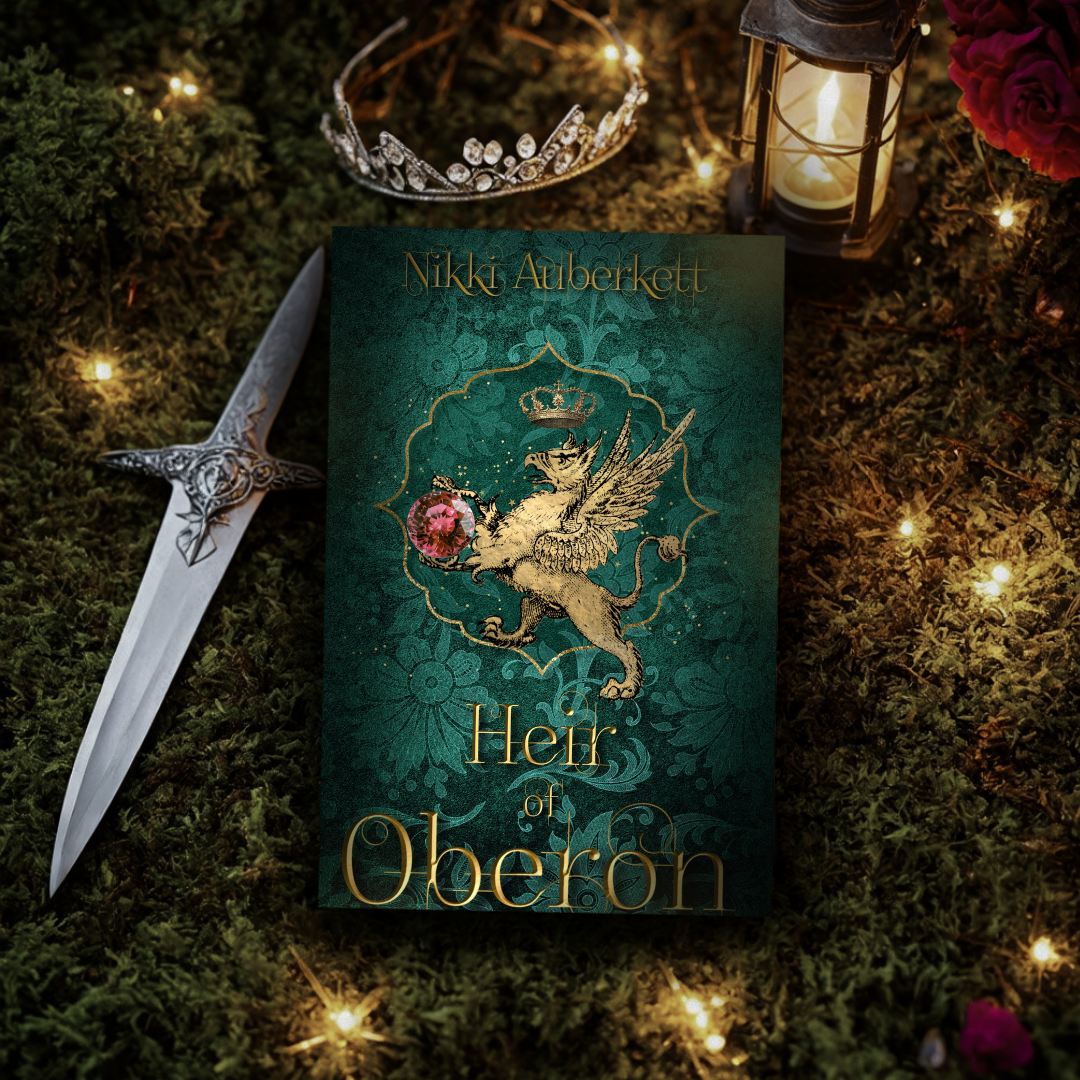
I’m not the biggest fan of my own book, Heir of Oberon.
Not that there’s anything inherently wrong with it. Quite the opposite, really! It has everything a powerful sequel should have:
Picks up where we left off in the previous book (Ithandryll)
Ties a few loose ends together while asking new questions and introducing new problems to continue on through the series
Weaves in the magic and whimsy of the Otherworld we’ve come to know and love while introducing more of the darker aspects we’re about to encounter head-on
Ends exactly where it’s supposed to, while promising far more adventure, answers, and awesomeness in the next book
So why can’t I be as deeply in love with this book as much as I was with its prequel?
And why—out of an ARC team of roughly 100 people, not including regular book sales—have only 10-20 people left reviews?
Unlike the marble and moonstone opulence of the palace, the bridge which connected palace grounds to the actual city portion of Baronane was primarily constructed with weathered granite covered in moss and vines and inlaid with cobblestone. The wide arch led pedestrians over a rush of river rapids that crashed over boulders in brilliant shimmers of blue and had to be at least a quarter of a mile wide, if not half.
“The Saphir River,” Meilyssa pointed out to Roxi as they strolled along the cobblestone. “It’s the largest river that runs through Ithandryll, from the northeastern mountains just on the other side of The Borderlands all the way to the western shores.”
Roxi stopped at the apex of the arch to peer over the side. “No sirens here, then?”
Mei snorted. “Not if they want to live. These rapids are deadly. There’s more of them beneath the cliffside.” She pointed at the section of the palace grounds that rose up into a steep cliffside, the apex much higher than the rest of area. “That area used to be used for executions. If the fall didn’t kill you, the rapids definitely did.”
I didn’t expect to come upon a genuine “break” in the story
The original lineup of books for the series were as follows:
Blood of Balor
Khali Rising
When the Firebird Sings
And that was it. Four books, maybe a few extra side novellas like The Changeling (or Chandelina; I haven’t settled on an official title yet) and Son of the Sidhe.
The thing is, I’d spent roughly 23 years writing Ithandryll—originally titled Whitewater—and suddenly felt the urge to finish the umpteenth draft, get it edited, and publish the dang thing. I set a deadline, locked myself into it via Kindle Direct Publishing’s preorder setup (more on that later), and allowed no room for excuses.
The deadline for the manuscript came.
I was still several chapters away from the ending.
Where I was, however, in the manuscript happened to be a crucial point where the mic drops on everyone: Roxi discovers a different perspective that changes everything she thought she knew about some of the most horrific aspects of her life, Devon witnesses firsthand the truth behind some of his own most traumatic and heart-shattering moments that have driven every decision he’s made thus far, and everyone else in that room sees and feels a very tangible, visceral, no-going-back-now line being drawn in the sand.
So that’s where I ended Book One.
You know, like a television series season that needs to promise you next season is 1) definitely happening and 2) worth the wait.
It would be fair to compare the gap between the ending of Ithandryll and where I’d wanted to actually end it to a raging rapids churning between me and the other side of the literary river.
Necessary to get through, but challenging enough to require some careful re-mapping and consideration before just diving in head-first without any sort of flotation device.
Like an outline.
Or a vague idea of what to put between the two points.
I fell too hard and too fast for the way-too-understandable “villain”
Surprise, surprise.
But let me clarify something here: this isn’t romantic love I’m talking about.
This is the kind of love that forges itself out of empathy and compassion after discovering why The Bad Guy is doing what they’re doing and completely understanding every microbe of it.
I honestly went into creating Krav with a very specific mental outline (let’s not kid ourselves; I barely actually outline anything ever) for his point, his purpose, and his plot.
But there were aspects that needed to be addressed. Questions to answer.
Like, “What’s his deal?” and ultimately, “What broke him—and when?”
The more I dug into finding those answers, the more I realized how awesome he is. How full of love and passion and empathy he’s been this whole time, and how horribly misplaced his sense of judgment and vindication is.
There’s just one problem…
If everything is going to fall into place like it should, he can’t stick around for it.
I needed “filler”—and every ounce of it suddenly became important
Have you ever read (or maybe watched) an author explain how characters tend to go off the rails and change the plans and sometimes just “show up”?
Yeah.
Quite a few of those happened in Heir of Oberon, and one of them literally shouted at me until I included him on the page and into the scene—which, incidentally, ended up making him a surprisingly important part of the narrative.
“I know who you are.” The puca eyed her hand with pointed suspicion, then tentatively shook it. “Albion Finnicus The Third. You may call me Professor Finn.”
Her brow shot up. “Full name? Really?”
“No. Just the parts I’m willing to give someone who recognizes greatness.”
“Oh for the love of—” Devon rolled his eyes. “Do you actually have anything to offer by way of information? Or are you just here to yell at us?”
This is where “bridge building” begins, and why it’s so important in a fantasy series
This is also where I, the award-winning author who’s been at it for a while, learned something in terms of perspective that changed how I viewed this unplanned novel.
I’d mildly (eh) complained about my disappointment in the performance of this book—and my disappointment in my own lackluster joy over creating it, publishing it, and generally just doing it, compared to how exuberant I was over Ithandryll—to a friend who’s one of those people with incredible insights into everything.
“Your disappointment and feeling of it being ‘filler’ is completely valid,” she gently told me. “This book was meant to feel like a bridge because it IS a bridge, but bridges are essential architecture.”
I don’t know why that slammed into me with such resonating truth…but it did.
Every piece of “filler” information, every scene created just to fluff up chapters and word count goals, every sacrifice of something or someone I’d grown attached to, became bricks and stones in the bridge needed to cover the river of internal lore between where I ended Ithandryll and where I needed to end Heir of Oberon (which was the originally-intended conclusion for Book One in the first place).
I needed to establish connections far stronger than the simple hints left in the beginning.
I needed to illustrate more of the beauty of the Otherworld’s various regions and inhabitants who have very little to do with the inner machinations of the capital city’s politics—yet everything to do with what’s around the corner.
I needed—and my primary cast of characters needed—space to process the tragedies and trauma of Book One in order to brace for everything coming in Book Three.
In so many ways, I needed to simply stand on that bridge next to Meilyssa, Michael, and Roxi, listening to the roar of the churning water below while gazing up at the harrowing cliffside of the past.
My friend went on to explain that in terms of reviews (and why there’s so few), there exists a good chance that readers are simply standing on that bridge as well, waiting for the next book while they process the emotional and psychological journey of the last two.
Honestly? She’s probably right.
And after all was said and done, and published…
I realized that the bridge didn’t land where Heir of Oberonends.
The bridge lands where Queen of Night begins.